 TTS GLOBAL
TTS / SERVICE GUIDE
Garment Needle Detection & Textile Metal Screening
Arrange screening for unwanted metal associated with manufacturing.
Request a quote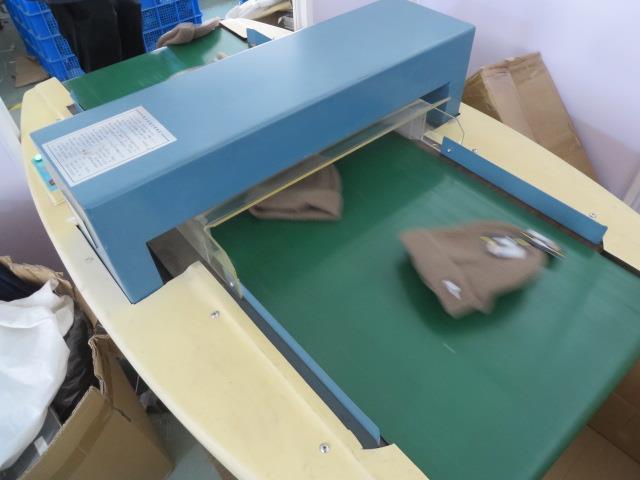
01 / WHEN TO USE IT
For textile and garment risks
- Garment or textile production involves needle-fragment concerns.
- A buyer requests an agreed metal-screening procedure.
- A production incident calls for a defined lot to be checked.
Understand the service in detail
Needles or unwanted metal fragments can become a concern during textile and garment manufacturing. Metal and needle detection is a screening service planned around the product, its intentional metal components and suitable detection equipment. Before work starts, TTS discusses the detection objective, product presentation, sensitivity and how rejected items should be controlled. Screening is meaningful only within the agreed equipment capability and procedure; it is not a blanket assurance that a product contains no metal.
- 01Product & sensitivity setup→
- 02Challenge checks→
- 03Screen & isolate→
- 04Traceable records
A scope guide; the actual methods and criteria are agreed for the project.
02 / A CLOSER LOOK
A needle detector is only useful inside a controlled process.
Open a checkpoint to see the evidence recorded and how it informs your decision.
01Identify the product configuration
Record fabric layers, garment folds, trims, fasteners and packaging that pass through the detector.
Metallic accessories and product thickness can affect the achievable screening approach.
02Confirm equipment checks
Agree the detector type, challenge pieces, check positions and frequency using the equipment instructions and buyer protocol.
A machine being switched on does not demonstrate the agreed detection capability throughout the working area.
03Manage a rejection
Define stop, isolation, investigation and re-screening steps for suspect items; retain their identification.
Passing a suspect item repeatedly until no alarm occurs is not a documented resolution of the cause.
04Keep status traceable
Separate screened and unscreened goods and reconcile the screened quantity, rejected items and final disposition.
The buyer needs evidence of coverage and the handling of exceptions, not only a photograph of the machine.
ILLUSTRATIVE EXAMPLE
A metallic trim changes the screening brief.
- !
The situation
A garment includes a metal buckle.
- ◎
What to record
Confirm equipment suitability and the configuration actually screened.
- ↗
The next decision
Agree the screening stage and document its limits.
Read the full scenario
Illustrative example: a garment style includes a metal buckle. Confirm whether the chosen equipment can distinguish the agreed contamination risk with that trim present, or whether screening must occur before the buckle is attached. Document the product configuration actually screened; a record from an earlier manufacturing stage should not be presented as a finished-garment scan.
03 / STANDARDS & REQUIREMENTS
The rule.
The scope.
The evidence.
Applicability and editions are confirmed for your product, market and project date.
Buyer needle-control protocol & equipment instructions
Specify detection performance and challenge testing for the actual equipment and product. There is no single sensitivity value appropriate for every garment.
Official source & scope04 / THE WORKING PROCESS
From your brief
to your next step.
01Prepare the brief
Provide the product details and reason for requesting metal or needle screening.
02Start the work
Confirm equipment suitability, procedure and the agreed detection capability.
03Examine & record
Screen the defined goods and control exceptions according to the handling plan.
04Review & follow up
Review the screening records and agree disposition or additional investigation.
Content guide; the agreed service determines the final deliverable.
05 / YOUR DELIVERABLE
A basis for
your next decision.
Screening records and identified exceptions within the agreed detection scope.
How to use the result
The screening record supports control of the specified manufacturing risk. Retain the agreed method and sensitivity information with the results, and investigate rejected items before deciding what can be returned to the shipment.
06 / Discuss your project
What to send for a quotation
- Product construction, metal trims and packed or unpacked condition.
- Lot quantity and required detection objective.
- Equipment availability and written rejected-item handling instructions.
Practical questions
Does a handheld metal check equal a validated conveyor screening process?
Not automatically. Equipment, coverage, sensitivity verification and operating procedure must be evaluated against the same buyer requirement.
Can products with metal zips or buttons be screened?
Suitability depends on the product and equipment. Send construction details before booking so the detection approach can be assessed.